What Is Roof Decking, and When Does It Need Replacing?
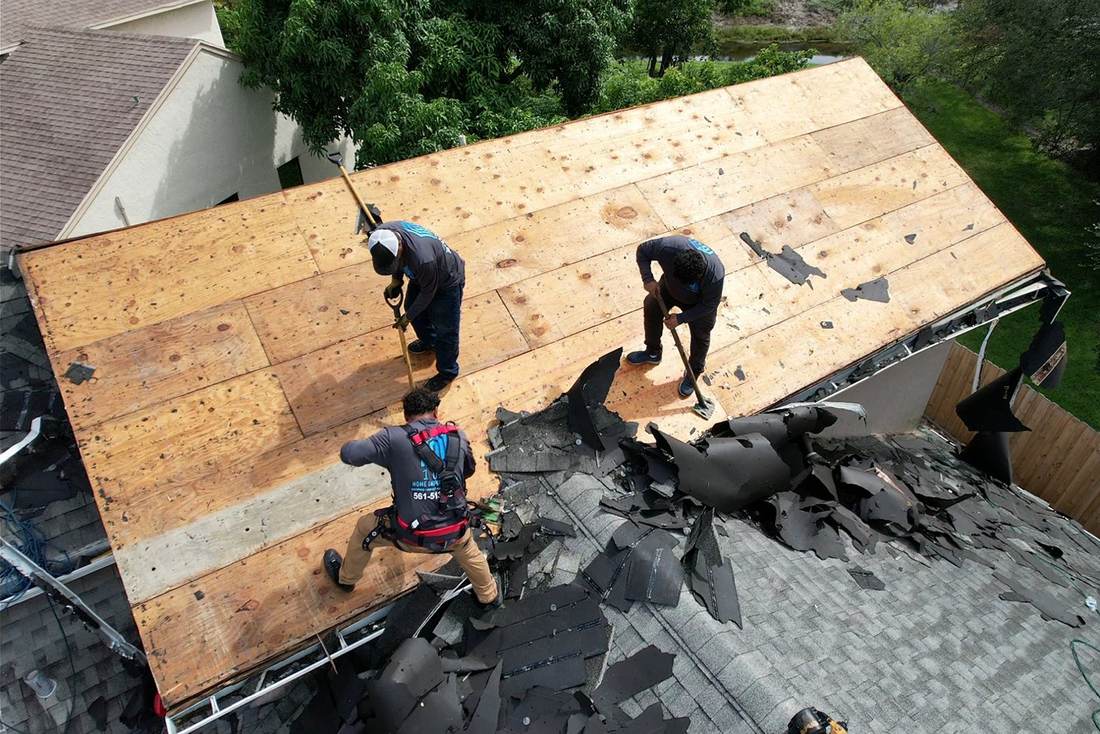
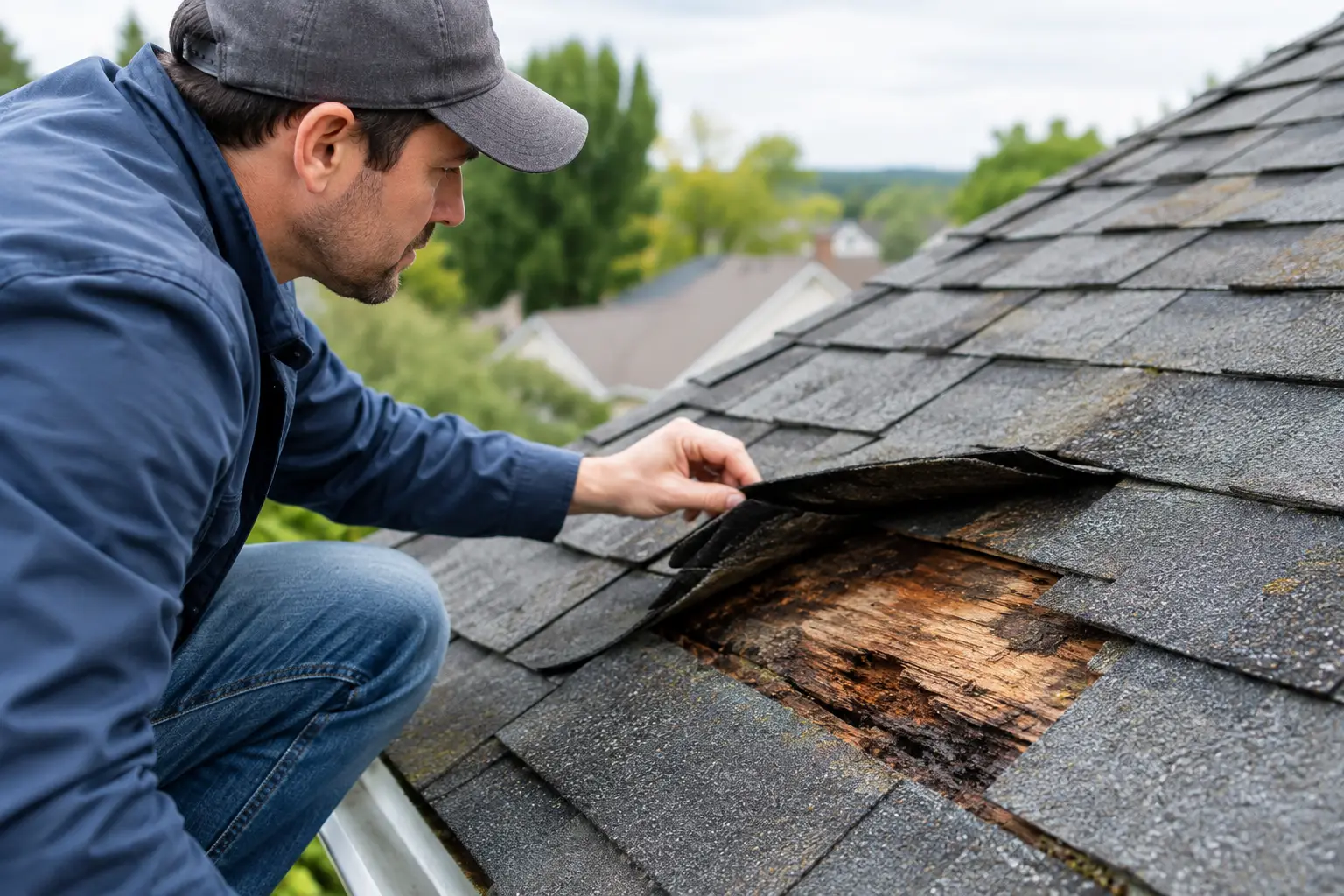
Roof decking, also called sheathing, is the plywood or OSB your roof is nailed to. It sits on top of the rafters or trusses and under the underlayment. Decking gets replaced when boards are rotten, delaminated or soft, which usually can't be confirmed until the old roof is torn off. Sound boards stay and get re-nailed.
Where Decking Fits in Your Roof
Think of a roof as layers, from the inside out:
- Framing: the trusses or rafters that give the roof its shape.
- Decking: the plywood or OSB sheets nailed across the framing. This is the solid surface everything else attaches to.
- Underlayment and secondary water barrier: the layers that keep water out if the top layer gets damaged.
- Roof covering: the shingles, tile, metal panels or flat roof membrane you see from the street.
The decking does two jobs. It gives the roof covering something solid to fasten to, and it ties the roof framing together so the whole roof acts as one piece in high wind. If the decking is weak, the best shingles or tile in the world won't hold the way they should. Our post on roof underlayment types for South Florida homes covers the layer that sits right on top of it.
Plywood vs. OSB
Most South Florida homes have one of two kinds of decking:
- Plywood: thin layers of wood veneer glued together in alternating directions.
- OSB (oriented strand board): wood strands pressed together with resin into large sheets.
Both are used on Florida roofs. Both hold up fine when they stay dry. The problem for either one is water. When moisture gets in over time, plywood layers can start to separate (that's called delamination) and OSB can swell and soften. Either way, the board loses its strength and its grip on the nails.
What Damages Decking in South Florida
Decking rarely fails on its own. Something lets water in first. The usual causes here:
- Small leaks left alone. A slow drip around a vent, skylight or valley can rot the wood underneath for years before a stain ever shows on the ceiling.
- Worn underlayment under tile. Concrete tile can last 40–50 years, but the underlayment under it usually needs replacing around 20–25 years. When it fails, water reaches the deck even though the tile looks fine.
- Heat and humidity with poor ventilation. A hot, damp attic is hard on wood.
- Storm damage. Missing shingles or broken tile after a hurricane or one of our afternoon storms in the rainy season expose the deck to rain.
If you've got a leak you can't track down, our guide on why your roof is leaking in South Florida walks through the usual suspects.
Signs Your Decking May Be Damaged
You can't see decking from the outside, but it leaves clues:
- A roofline that dips or sags between trusses.
- Spots that feel soft or spongy when a roofer walks the roof.
- Water stains on the underside of the decking when you look in the attic.
- Ceiling stains inside the house, especially ones that keep coming back.
- Shingles or tiles that won't stay fastened in one area.
Any of these is worth a closer look. A small area of bad decking can often be handled as part of a repair, like a roof repair in Boynton Beach or anywhere else we work. Widespread damage usually points toward replacement.
What Happens to Decking During a Roof Replacement
This is when decking gets its real inspection. Once the old roof is off, the crew can see and walk every sheet. Here's how it usually goes:
- The old roof covering and underlayment come off down to the deck.
- The crew checks the boards. Rotten or delaminated sheets get cut out and replaced.
- The deck gets re-nailed. Florida code requires re-nailing the deck and a secondary water barrier on many reroofs.
- The building department inspects. Many cities do a deck/nailing or dry-in inspection before the roof covering goes on. Exact stages vary by city.
- The new underlayment and roof covering go on over a solid, properly fastened deck.
Most of the deck is usually reused. It's only the damaged sheets that get swapped out. Our post on what happens during a roof replacement covers the full job from start to finish.
How Decking Shows Up on Your Quote
Nobody can see the deck until the old roof is torn off. That's why roofing quotes usually price decking per sheet as an extra, instead of building a guess into the main price. It's normal. It's not a trick, as long as it's spelled out.
When you compare quotes, check that each one:
- States the price per sheet of replacement decking.
- Says how you'll be told about the number of sheets replaced, such as photos of the damaged boards.
- Includes the deck re-nailing and secondary water barrier the code calls for.
A quote that's much lower than the rest sometimes leaves these items vague. Our guide on how to compare roofing estimates with confidence goes deeper. At 1 OAK, decking replacement is one of the things that can move a final price, along with roof complexity, permit and code items and the height of the house, so the final number comes after a free inspection. For a starting point, try our instant online roof quote.
Frequently asked questions
How much does it cost to replace roof decking?
Roofers usually price decking per sheet as an extra on the quote, because the damage can't be seen until tear-off. The total depends on how many sheets turn out to be bad. Ask each contractor for their per-sheet price in writing so you can compare.
Do you always replace the decking with a new roof?
No. Sound boards stay in place and get re-nailed to current standards. Only rotten, delaminated or soft sheets get replaced.
Can you tell if decking is bad before the roof comes off?
Sometimes. Sagging, soft spots, attic stains and recurring ceiling leaks are good clues. But the full picture only shows up once the old roof is torn off.
Does re-nailing the deck help with insurance?
It can. Roof deck attachment is one of the items on Florida's wind mitigation form (OIR-B1-1802), and insurers must offer discounts for qualifying wind-resistant features. The size of the discount varies by insurer, so get a new wind mitigation inspection after your reroof.