Roof Leak Diagnosis Example for Florida Homes

A ceiling stain is rarely the actual starting point of a leak. Water can enter near a roof penetration, travel along decking or framing, and appear several feet away inside the home. This roof leak diagnosis example shows why a careful inspection matters for Boynton Beach and Palm Beach County homeowners, especially after wind-driven rain, tropical storms, or days of heavy summer downpours.
The goal is not to cover a stain or apply sealant where water happened to show up. The goal is to identify the true entry point, understand how far moisture traveled, and make a repair that protects your home instead of delaying a larger problem.
Roof Leak Diagnosis Example: Water Around a Ceiling Vent
Imagine a homeowner notices a brown ring forming around a bathroom ceiling vent after a hard afternoon storm. The stain is small, and there is no active drip by the next morning. It would be easy to assume the vent itself is the problem. A professional diagnosis starts there, but it does not end there.
Inside the attic, the roofer checks the insulation above the stained area for dampness, compressed material, dark wood, or a visible water trail. In this example, the insulation is wet, but the roof decking directly above the vent is dry. That is a useful clue: the water may be entering uphill from the stain and following the roof framing before dropping near the vent opening.
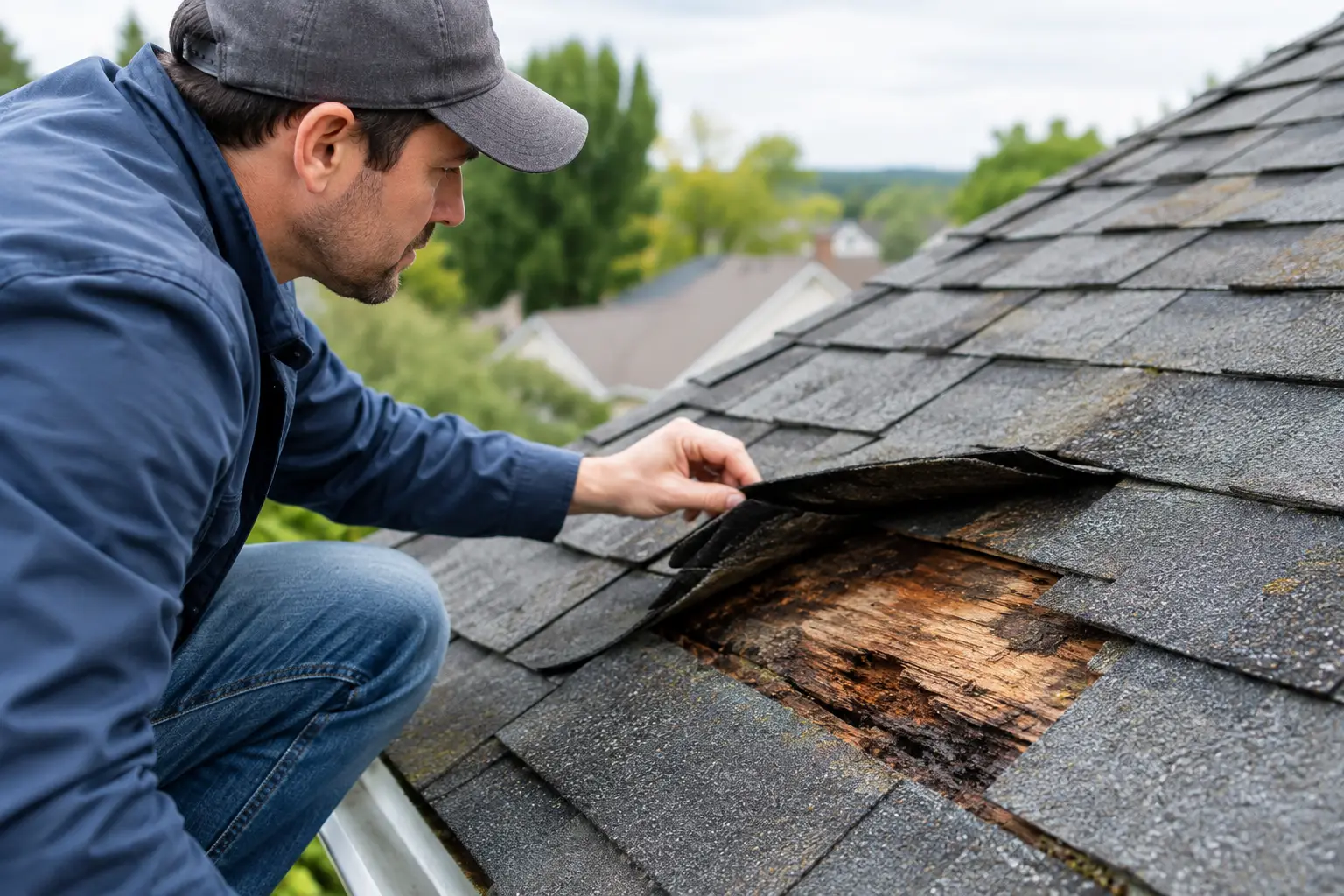
On the roof, the inspection continues above the bathroom. The vent boot is examined for cracks, loose fasteners, failed sealant, and gaps where the flashing meets the roofing material. The shingles or tiles around it are also checked for displacement, broken pieces, lifted edges, and damaged underlayment.
In this case, the vent boot is intact. The actual issue is a few feet higher on the roof, where wind lifted a shingle tab and exposed an aging nail penetration. During normal rainfall, the area may shed water without trouble. During wind-driven rain, water is pushed beneath the shingle course, reaches the nail hole, and travels along the decking toward the lower bathroom vent.
The repair is not a cosmetic patch around the ceiling stain. It involves correcting the damaged shingle area, sealing or replacing compromised components as needed, and confirming that the surrounding roof system remains sound. Once the roof is dry and the leak source is addressed, the interior can be monitored and repaired appropriately.
Why the Visible Stain Can Be Misleading
Roof leaks are not always straightforward. Tile, shingle, metal, and flat roofing systems each direct water differently, and their failure points are not the same. On a sloped roof, water may run under the surface material before reaching the underlayment. On a low-slope or flat roof, ponding water, worn seams, drainage issues, and flashing transitions often require closer review.
A stain near an exterior wall could be caused by roof flashing, but it could also involve a wall penetration, window opening, gutter overflow, or damaged fascia. A stain around a skylight may indicate failed flashing, but condensation or a nearby roof defect can create similar symptoms. This is why a diagnosis should follow the path of the water instead of guessing based on the room where damage appears.
Florida weather adds another layer of complexity. Intense rain can reveal a weakness that remains hidden during lighter showers. Strong winds can lift materials just enough to create an intermittent leak. Salt air near the coast and year-round heat can also shorten the service life of sealants, exposed fasteners, and certain flashing details.
What a Professional Roof Leak Inspection Looks For
A quality inspection considers the full roofing system, not just the spot above a stain. The inspection commonly starts indoors, where moisture marks, peeling paint, bubbling drywall, mold-like discoloration, and active drips help establish the leak pattern. If attic access is available, the roofer checks for wet insulation, wood staining, daylight at penetrations, and deteriorated decking.
Outside, attention turns to the roof surface and every transition where water can enter. Flashing at chimneys, vents, skylights, valleys, wall intersections, and roof edges deserves close attention. So do pipe boots, fasteners, ridge details, gutters, drains, scuppers, and areas where debris holds water against the roof.
For tile roofs, a cracked tile may be part of the issue, but the underlayment beneath the tile is often the more important layer to assess. Replacing one broken tile without evaluating the membrane below may not solve the leak. For shingle roofs, missing granules, creased tabs, exposed nails, damaged flashing, and improperly sealed repairs can all create water entry points.
Metal roofs require examination of seams, fasteners, flashing, and panel transitions. Flat roofs call for a close look at seams, penetrations, drainage paths, blisters, cracks, and areas of standing water. The right repair depends on the roof type, its age, the scope of damage, and whether the problem is isolated or part of broader deterioration.
When a Small Leak Is Not a Small Repair
A small ceiling mark does not automatically mean you need a full roof replacement. Many leaks are localized and can be repaired effectively when the surrounding roof system is in good condition. Still, it is worth taking a leak seriously because water can affect more than the drywall you can see.
Moisture trapped in insulation reduces its effectiveness and can increase cooling demands. Wet decking can soften and lose strength over time. Repeated water intrusion may damage framing, promote microbial growth, or reach electrical fixtures. In South Florida homes, where air conditioning runs often and humidity is high, lingering moisture can become a comfort and indoor air quality concern.
The key question is whether the leak is isolated or a warning sign. If a roof has several repaired areas, widespread underlayment aging, recurring leaks after storms, deteriorated flashing, or visible material failure across multiple sections, a spot repair may only provide temporary relief. An honest assessment should explain what can be repaired now and what condition the rest of the roof is in.
What Homeowners Should Do Before the Inspection
If water is actively dripping, place a container below the leak and move furniture, electronics, and valuables out of the area. If the ceiling is bulging with water, do not puncture it unless you understand the risks and can do so safely. Water near lighting, outlets, or electrical panels should be treated with extra caution. Turn off power to the affected area if it can be done safely, and contact a qualified professional.
Take photos of the ceiling stain, dripping water, and any visible exterior damage from the ground. Note when the leak occurred, how long it lasted, and the weather conditions at the time. Did it happen during a brief heavy storm, after sustained rain, or only when wind came from a certain direction? Those details can help narrow the investigation.
Avoid climbing onto the roof to inspect it yourself. Wet roofing materials are slippery, and walking on tile or aged shingles can cause additional damage. Applying caulk or roof cement without finding the water path may trap moisture or redirect water into another vulnerable area.
A Repair Should Match the Cause
The best roof repair is specific to the failure, not a one-size-fits-all application of sealant. A damaged pipe boot may need replacement. A lifted shingle section may need proper resealing or replacement. Failed valley flashing may require a more involved repair. If a flat roof leak comes from a separated seam or drainage issue, the repair must address both the opening and the water movement that contributed to it.
A dependable contractor should explain what was found in clear terms, show you the affected area when possible, and recommend work based on the roof's actual condition. At 1 OAK Home Improvement Inc., that means approaching leak investigations with the same care given to larger roofing projects: protect the home, identify the source, and recommend work that makes practical sense.
Do not wait for a small stain to become a ceiling repair, insulation replacement, and structural concern. When a leak appears, document the signs, keep the area safe, and schedule a professional roof evaluation. A precise diagnosis gives you the clearest path back to a dry, protected home.