When to Replace Rotted Roof Decking in Florida
A small brown ring on the ceiling after a hard Boynton Beach rain can point to a much larger issue above it. Knowing when to replace rotted roof decking helps protect the structure beneath your roof, not just the shingles or tiles you can see from the street. Decking that has lost its strength cannot reliably hold roofing fasteners, resist wind pressure, or support a lasting repair.
Roof decking is the solid wood layer installed over the roof framing. Your underlayment and finished roof covering sit on top of it. When water gets through a damaged roof, failed flashing, exposed nail, or aging underlayment, the decking can stay wet long enough to decay. In South Florida, repeated heavy rain, humidity, and storm-driven wind can turn a minor leak into hidden wood damage faster than many homeowners expect.
What Rotted Roof Decking Looks Like
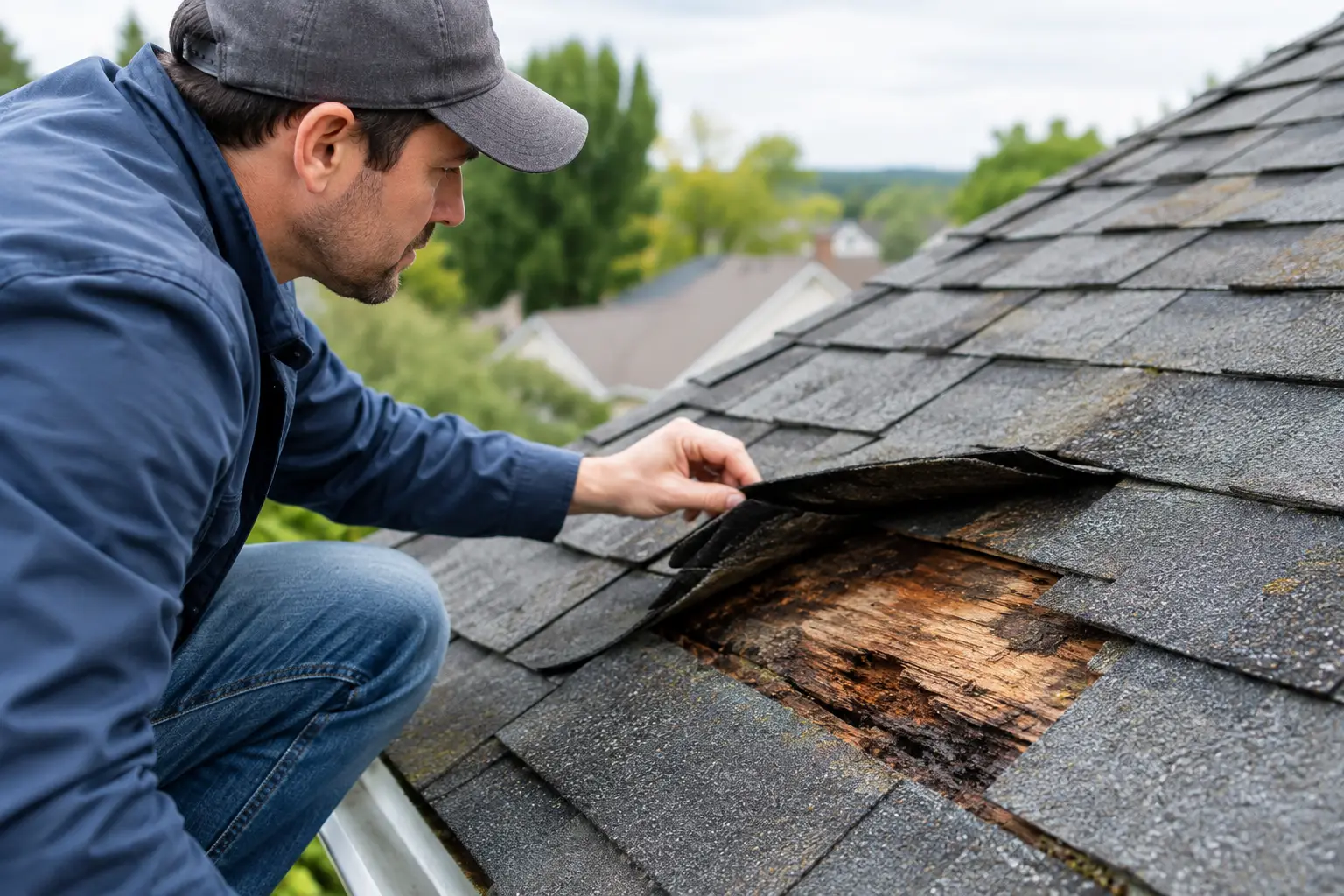
Rotted decking is not always visible from the ground. In fact, a roof can look acceptable from the outside while the wood beneath its surface is soft, stained, or deteriorating. The clearest evidence often appears during a professional roof inspection or after old roofing materials are removed for a replacement.
From inside the attic, look for dark water stains, softened plywood, peeling wood layers, mold growth, or daylight showing through areas that should be solid. A musty attic odor and wet or compressed insulation can also suggest a long-term moisture problem. On the roof itself, localized dips, sagging between rafters, lifted shingles, loose tile fasteners, or soft spots underfoot require prompt attention.
A ceiling stain does not automatically mean the deck is rotten. Water may have entered recently and caused only surface discoloration. The concern rises when the leak has been active for weeks or months, the wood feels spongy, or fasteners no longer hold securely. A qualified roofer should determine the condition of the decking rather than relying on appearance alone.
When to Replace Rotted Roof Decking Instead of Repairing It
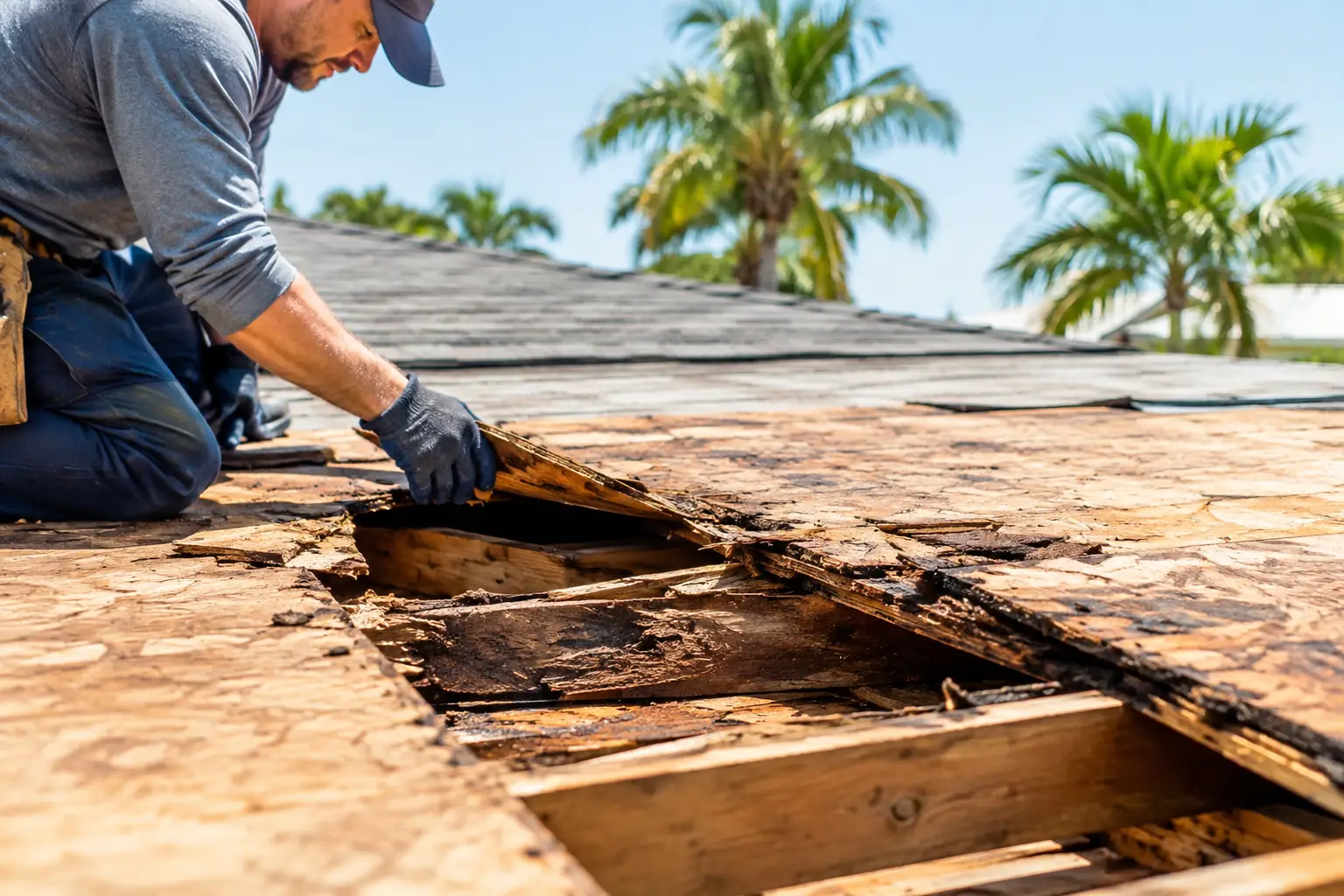
Decking should be replaced when it is structurally weakened, not merely because it has a stain. If a roofer can press into the wood, pull up loose layers of plywood, or find sections that crumble around fasteners, that material has reached the point where replacement is the safer choice. New roofing should never be installed over wood that cannot provide a solid attachment base.
Replacement is also necessary when rot affects a concentrated area around a leak. A valley, chimney connection, skylight, vent pipe, or roof-to-wall transition may allow water to travel beneath the roof covering before it becomes visible indoors. By the time a ceiling stain appears, the damaged decking area can be wider than the stain suggests.
During a full roof replacement, exposed decking deserves a careful inspection across the entire roof. Some homes need only a few sheets replaced. Others have broader damage from years of underlayment failure, aging roof materials, or previous repairs that did not fully stop water intrusion. The right scope depends on what is found after the roof covering is removed, not on a guess made from the driveway.
Why Soft Decking Is a Bigger Issue in Palm Beach County
Roofing systems in Palm Beach County must handle more than routine rainfall. High winds can place intense pressure on shingles, tiles, metal panels, and the fasteners connecting them to the structure. If the wood deck underneath is compromised, those fasteners may not grip as designed.
That matters during severe weather, but it also affects day-to-day performance. Loose nails and screws can allow materials to shift. Gaps may develop around penetrations. Water can enter under the roof covering and continue damaging insulation, framing, drywall, and electrical components.
There is another trade-off homeowners should understand. Replacing damaged decking adds work during a roof project, but covering it up can create a much more expensive repair later. A new roof is meant to protect your home for years. Installing it over deteriorated wood risks shortening the useful life of the entire system and can leave you with leaks despite having new materials overhead.
Not Every Dark Spot Means the Whole Roof Deck Must Go
Homeowners sometimes worry that one leak means every sheet of roof decking needs replacement. That is usually not the case. Wood can show an old water mark and still be dry, firm, and structurally sound. A responsible evaluation separates cosmetic staining from active decay.
The condition of the wood, the size of the affected area, and the source of the moisture all matter. If a small area is damaged and the surrounding decking is solid, targeted replacement may be appropriate. If water has spread across multiple sections, caused widespread delamination, or affected roof framing, the repair needs to extend far enough to restore a sound substrate.
Mold is another reason not to delay an inspection. Mold can grow where moisture is present, but it is not the same thing as rot. The priority is to identify and stop the water source, remove materials that cannot be safely dried or restored, and verify that the roof structure is dry before closing it back up.
What a Professional Decking Inspection Should Include
A thorough roofing assessment begins with the visible roof condition, but it should not end there. The inspection should consider the age and type of roof, past repair areas, flashing details, drainage patterns, attic ventilation, and signs of interior water intrusion.
When decking is accessible, a roofer checks for softness, delamination, darkened wood fibers, fastener pull-through, and sagging. During a roof replacement, each exposed section can be evaluated before the new underlayment and roofing materials are installed. This is the best time to address hidden problems because the deck is fully accessible.
For homes with tile roofs, this step is especially valuable. Tile can last a long time, but the waterproof layer and decking beneath it may age differently. Reusing serviceable tile or installing new tile over a weak deck does not solve the underlying issue. The base must be dry, stable, and properly prepared first.
Do Not Wait for a Collapse or Major Ceiling Leak
Roof decking rarely fails all at once without earlier warning. More often, moisture causes a slow decline: a recurring leak, a growing ceiling stain, a patch that keeps needing repair, or a section of roof that looks uneven after a storm. Addressing those signs early may limit the amount of decking that needs replacement.
Call for an inspection after a major storm if you notice missing materials, displaced tiles or shingles, water spots, or new debris in the attic. You should also schedule an evaluation if your roof is near the end of its expected service life. Waiting until water is pouring through the ceiling can turn a manageable roof repair into a larger interior restoration project.
Avoid walking on a roof to test for soft spots. Damaged decking may not support your weight, and fragile roofing materials can be broken underfoot. A licensed and insured contractor has the training to assess the roof safely and explain what is damaged, what remains sound, and what work is truly necessary.
Protect the Roof System From the Bottom Up
A dependable roof is a complete system: sound decking, properly installed underlayment, secure flashing, effective ventilation, and roofing materials suited to the home. Replacing only the visible surface while ignoring weakened wood leaves the system vulnerable where it matters most.
At 1 OAK Home Improvement Inc., the goal is to give homeowners clear answers and quality work that protects their greatest investment. If you have a recurring leak, visible sagging, or concerns after storm season, a professional roof inspection can identify whether the decking needs attention before a small hidden problem takes a larger toll on your home.