


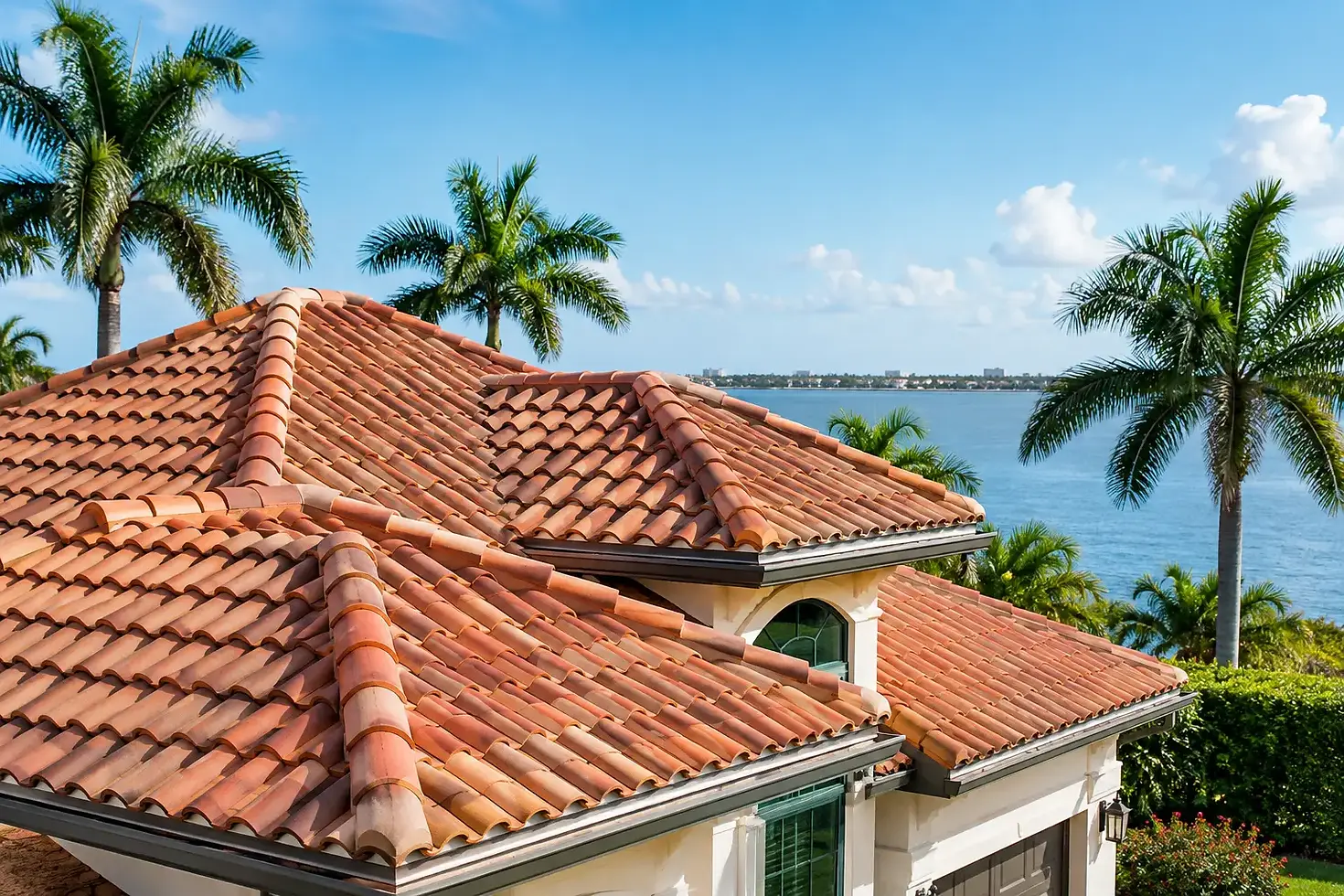
Tile Roofing for Palm Beach County Homes

A tile roof can give a Palm Beach County home the finished, enduring look many homeowners want, but tile roofing is about far more than curb appeal. In South Florida, your roof must manage intense sun, wind-driven rain, humidity, salt air near the coast, and hurricane-season pressure. The tile you see from the street matters, but the system beneath it often determines how well your home is protected.
For a roof replacement, the right decision starts with an honest look at your existing roof structure, your preferred style, and the condition of the underlayment. A properly planned tile roof can protect your greatest investment without adding unnecessary stress to the project.
Why Tile Roofing Fits South Florida Homes
Tile has been a familiar sight across Boynton Beach, Delray Beach, Boca Raton, and surrounding communities for good reason. Its classic profile works with Mediterranean, coastal, contemporary, and Spanish-style architecture. More importantly, quality tile materials are built to handle exposure that can quickly age less durable roofing products.
Concrete and clay tiles do not rot, and they are not a food source for insects. Their color and texture can also hold up well when homeowners choose a product designed for Florida conditions. Tile creates an air space above the roof deck that can help reduce direct heat transfer into the home, although actual energy performance depends on attic insulation, ventilation, roof color, and the condition of the full roofing system.
The trade-off is weight. Tile roofing is considerably heavier than many shingle systems, so a contractor must confirm that the home can support the selected tile assembly. This is especially important when changing from shingles to tile. A beautiful roof is never worth compromising the structure beneath it.
The Parts of a Tile Roof That Matter Most
Homeowners naturally focus on the color, shape, and style of the tiles. Those choices matter, but they are only the visible layer of protection. Water resistance and wind performance depend on the details installed underneath and around the tile.
Underlayment is the primary water barrier
Tiles shed water, but they are not a sealed waterproof surface by themselves. Rain can move beneath tile during strong storms, especially when wind pushes water uphill or sideways. The underlayment beneath the tile is the critical barrier that protects the roof deck from moisture intrusion.
When replacing a tile roof, the old tiles may sometimes be removed and reset if they are in suitable condition. However, the underlayment, flashings, fasteners, and damaged decking must be evaluated carefully. Reusing tile does not mean reusing worn-out components. A roof system is only as dependable as its weakest layer.
Flashings and transitions prevent common leaks
Roof leaks often begin where materials meet: around chimneys, vents, skylights, walls, valleys, and changes in roof slope. These areas need precise flashing installation so water has a controlled path off the roof.
A contractor should also inspect the metal details around penetrations for corrosion, loose connections, and signs that prior repairs were only temporary. In coastal Palm Beach County, salt exposure can make material selection and installation quality even more important.
Attachment must meet wind requirements
Florida roofs are built with wind resistance in mind, and tile attachment is not a one-size-fits-all process. The right fastening method depends on the tile product, roof geometry, local code requirements, and the home’s exposure. Perimeter areas, corners, ridges, and hips can experience greater wind forces than the center of the roof.
A professional installation plan accounts for those differences before work begins. That is how a roof replacement moves beyond appearance and toward real, dependable protection.
Choosing Between Concrete and Clay Tile
Concrete and clay are both proven tile options, yet they offer different visual and practical advantages. The best choice depends on your home’s architecture, desired finish, structural capacity, and long-term maintenance expectations.
Concrete tile is widely used across South Florida because it offers a broad range of profiles and colors. It can be made to resemble traditional barrel tile, flat slate-like tile, or wood shake. It delivers a substantial appearance and is a practical fit for many homes, provided the roof structure is designed for its weight.
Clay tile brings a distinctive, timeless character that many homeowners associate with upscale coastal and Mediterranean homes. Its natural color variation can be especially appealing, and certain clay profiles create a more traditional roofline. As with concrete, product quality and proper installation matter more than the label alone.
Flat tile can give a home a clean, modern look, while high-profile barrel tile creates deeper shadows and a more traditional silhouette. The profile affects appearance, water movement, and the quantity of tile required, so it should be selected with the entire roof design in mind rather than from a sample board alone.
When Repair Makes Sense and When Replacement Is Smarter
Not every issue requires a complete replacement. A few slipped, cracked, or displaced tiles may be repairable if the underlayment remains sound and the damage is limited. Broken tiles should not be ignored, however. Even a small opening can allow water into areas that are meant to stay dry.
A larger problem may be hidden below intact-looking tile. Warning signs include recurring leaks, widespread cracked or loose tiles, deteriorated underlayment, soft decking, stained ceilings, or repairs that keep returning to the same areas. If the roof has reached the end of its serviceable life, repeated patching can create frustration without addressing the actual cause.
The only responsible answer comes from an on-roof inspection. A contractor should explain whether the concern is isolated to tile, flashing, underlayment, or roof decking, then recommend a scope of work that fits the condition of the home. Clear communication is part of quality workmanship.
What to Expect During a Tile Roof Replacement
A well-managed roof replacement begins before crews arrive. The contractor should review the roofing material, roof layout, access points, protection for landscaping and exterior areas, and any necessary permits. Homeowners should know what work is planned, how the property will be protected, and how the finished roof will be checked.
During installation, the old roof covering is removed as needed so the deck can be inspected. Any damaged wood should be addressed before the new system is built. Next come the water-protection layers, flashings, vents, and tile attachment components. The tile is then installed according to the selected system and roof layout, with careful attention at valleys, hips, ridges, edges, and penetrations.
The final walkthrough should include cleanup, a visual review of the roof, and confirmation that debris and loose materials have been removed from the property. Precision, punctuality, and professionalism are not extras during a major exterior project. They are the standard homeowners deserve.
Maintaining a Tile Roof After Installation
Tile roofs need periodic attention, even though the materials are known for longevity. After severe weather, look from the ground for missing, shifted, or visibly broken tiles. Check ceilings and attic areas for water stains or dampness, and keep gutters and drainage paths clear so water is not held against roof edges.
Avoid walking on the roof unless necessary. Tile can crack under concentrated weight, particularly when someone steps in the wrong location. If you notice an issue, have a qualified roofing professional inspect it rather than relying on a quick surface repair.
Tree branches should also be kept from rubbing against the roof. In South Florida, overhanging limbs can scrape tile, drop debris into valleys, and create more opportunity for moisture to collect where it should drain freely.
A Roof Decision Built Around Protection
Tile roofing can be an excellent choice for homeowners who want lasting visual appeal and a roof system suited to South Florida conditions. The right material is only part of the decision. Structural readiness, quality underlayment, secure attachment, accurate flashing, and disciplined installation all deserve equal attention.
For homeowners in Boynton Beach and Palm Beach County, 1 OAK Home Improvement Inc. can help evaluate whether tile is right for your home and explain the condition of your current roof in straightforward terms. A careful inspection today can give you a clearer path to a roof that looks right, performs well, and protects your home through the seasons ahead.


Comments