


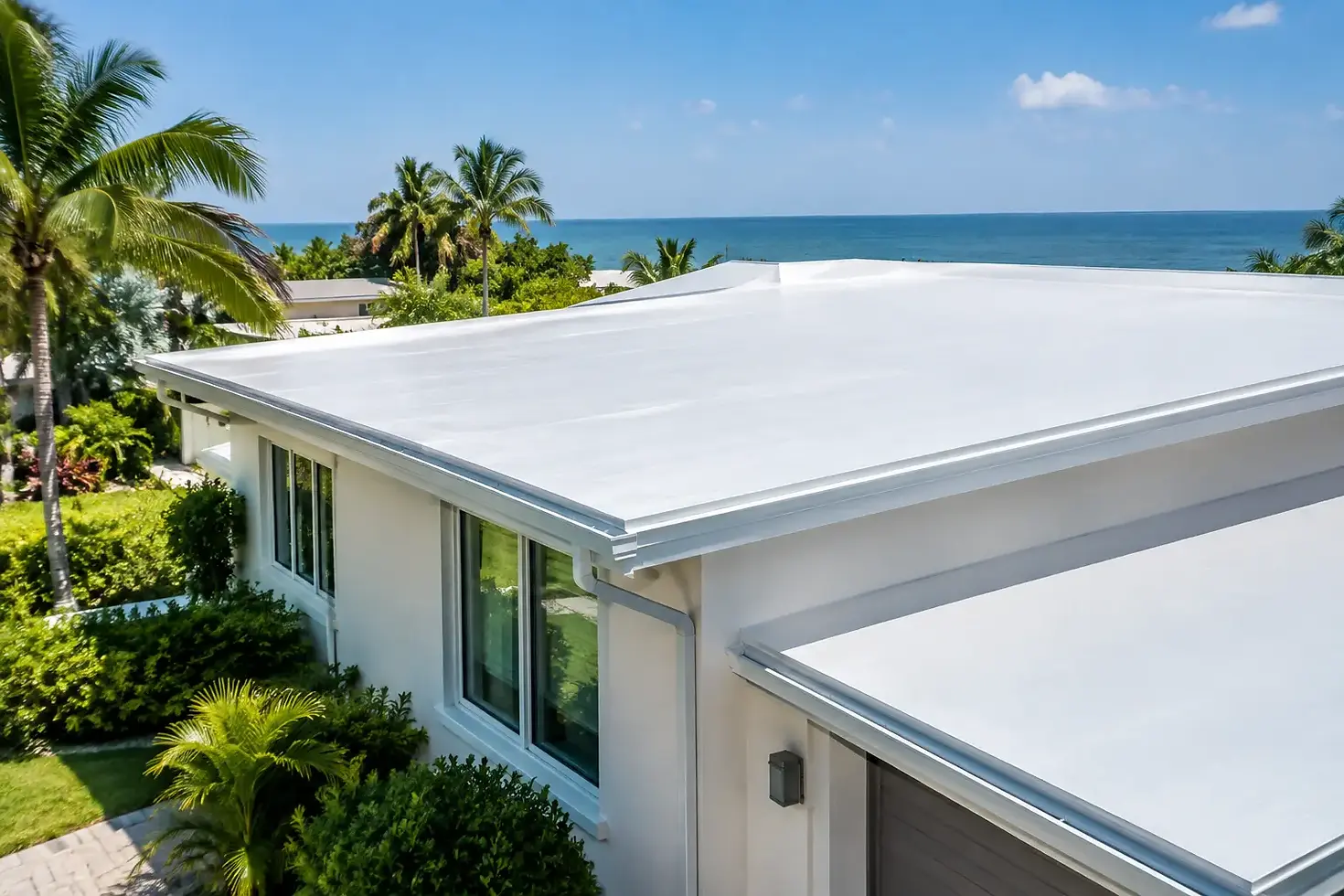
Cool Roofs for Palm Beach County Homes

A roof can sit well above your living space and still have a major effect on how your home feels every afternoon. In South Florida, intense sun can heat roofing materials for hours, pushing that heat into the attic and placing more demand on your air conditioning. Cool roofs are designed to reflect more solar energy and absorb less heat, giving homeowners a practical way to improve roof performance during Palm Beach County's long hot season.
For a roof replacement, this is worth discussing before you settle on a color or material. A cooler roof surface can be a real benefit, but the right choice must also suit your home's design, roof slope, drainage, wind requirements, and long-term maintenance needs.
What Makes a Roof a Cool Roof?
A cool roof is not one specific roofing product. It is a roof assembly or surface designed with a high solar reflectance and, in many cases, strong thermal emittance. Put simply, it reflects a larger share of the sun's rays and releases absorbed heat more effectively than a darker, less reflective roof.
White and light-colored roof surfaces are often the first examples homeowners think of. They generally reflect more sunlight than dark surfaces. But color alone does not tell the whole story. Modern shingles, tiles, metal panels, and roof coatings can use reflective pigments and specialized finishes to improve solar performance while offering more color options than bright white.
The goal is not to make a roof cold. Under Florida sunshine, every roof will become warm. The difference is that a cool roof can reach a lower surface temperature than a comparable conventional roof, which may reduce heat transfer into the attic and home.
Why Cool Roofs Make Sense in Boynton Beach
Boynton Beach homeowners deal with a combination that makes roof decisions especially important: strong year-round sun, high humidity, heavy rain, salt exposure near the coast, and hurricane-season wind. Energy efficiency matters, but it should never come at the expense of a properly installed, code-compliant roof system.
When a roof reflects more solar heat, the attic may stay cooler during peak afternoon hours. That can make upper rooms feel more comfortable and may help reduce how hard the cooling system has to work. Actual energy savings vary. Insulation levels, ductwork location, ceiling air leaks, thermostat habits, window exposure, and the age of the AC system all affect the result.
A reflective roof can also improve comfort in spaces that are especially prone to heat, such as garages, bonus rooms, vaulted ceilings, and rooms directly below a low-slope roof. For homes with older insulation or poorly sealed attic access points, however, roof reflectance is only one part of the solution.
Cool Roofing Options for Florida Homes
The best cool roof material depends on the type of roof you have and the look you want for your property. A qualified roofing contractor should evaluate the complete system, not simply recommend the lightest color available.
Metal Roofing
Metal roofing is naturally well suited to reflective finishes. Many painted metal panels are available in colors formulated to reflect more solar energy, including lighter neutrals and some medium tones. Metal is durable, lightweight compared with many tile systems, and a strong option for homeowners seeking a clean, modern appearance.
The trade-off is that material selection and installation details matter greatly. Proper fastening, flashing, underlayment, panel layout, and wind-rated components are essential in South Florida. A metal roof should be selected for proven performance, not just its color or claimed reflectivity.
Tile Roofing
Concrete and clay tile remain popular throughout Palm Beach County because they complement many Mediterranean, coastal, and traditional home styles. Lighter tile colors can help limit heat absorption, and the air space beneath tile may contribute to thermal performance.
Tile roofs are substantial systems that require the right structural support and careful installation. Cracked tiles, failing underlayment, and poorly detailed flashing can create problems even when the tile itself looks intact. If you are replacing a tile roof, it is smart to discuss the underlayment, attachment method, ventilation, and available light or reflective color options as one complete project.
Reflective Shingles
Homeowners who prefer asphalt shingles do not have to choose between curb appeal and energy-conscious design. Some shingles are made with reflective granules that can provide better solar reflectance than standard dark shingles. They are available in a range of colors, though the highest reflectance usually comes from lighter shades.
Shingle performance is affected by more than color. The roof deck condition, underlayment, ventilation, flashing, and installation quality all influence how well the roof protects your home. In a hurricane-prone area, correct system installation is the foundation of peace of mind.
Low-Slope and Flat Roof Systems
Low-slope roofs often benefit most visibly from reflective surfaces because they receive direct sun across a broad, relatively flat area. White membranes and reflective coatings are common choices for residential flat roofs, patios, additions, and certain modern home designs.
A coating can be useful in the right circumstances, but it is not a fix for active leaks, damaged substrate, trapped moisture, or a roof that has reached the end of its service life. The roof should be inspected first. Drainage is equally important, since standing water can shorten the life of many roof systems and collect debris that reduces reflectivity.
Does Roof Color Really Affect Energy Use?
Yes, but the size of the impact depends on the house. A white or light roof generally reflects more heat than a dark roof, yet a roof color decision should not be made in isolation. A well-insulated attic with properly sealed ducts may see a different result than a home with limited insulation and substantial attic air leakage.
Darker roofing can still be the right visual choice for some properties, especially where architectural style, community guidelines, or personal preference point in that direction. In that case, ask about cool-color products. These materials are designed to reflect more infrared energy than a conventional roof of a similar visible color.
Also consider how the roof will look over time. Florida rain, airborne dust, algae, leaves, and debris can dull a highly reflective surface. Regular roof care and prompt removal of debris help preserve drainage and appearance. Cleaning methods should always be appropriate for the roofing material to avoid unnecessary damage.
A Cool Roof Still Needs the Right Attic System
Roof reflectance is only one layer of home protection. Your attic insulation, ventilation strategy, roof deck, and air sealing determine how much heat reaches your living areas. A roof replacement is an ideal time to inspect these components because the existing roof system is already being evaluated.
Ventilation deserves a careful, individualized approach. More vents are not automatically better. Intake and exhaust need to work together, and the roof design must prevent wind-driven rain from entering the attic. In South Florida, a contractor should also account for applicable building code requirements and the specific conditions of your roof.
For homeowners considering an energy-focused upgrade, the most useful conversation is not, “What is the coolest color?” It is, “What roof system will protect my home, fit its style, and manage heat effectively for years?” That question leads to better decisions.
Questions to Ask Before Choosing Cool Roofs
During an estimate, ask which roofing materials and colors offer higher reflectance for your home. Ask how the proposed system addresses underlayment, flashing, ventilation, drainage, and wind resistance. For a flat or low-slope area, ask whether the existing roof is a suitable candidate for a coating or whether replacement is the safer long-term solution.
You should also ask what preparation is needed before installation. A dependable contractor will inspect the deck and surrounding roof details, explain what the project includes, and communicate clearly if concealed damage is found once the old roof is removed. That level of care matters more than a broad claim about energy savings.
Your roof is your home's first line of defense against sun, rain, and wind. If you are planning a roof replacement in Boynton Beach or elsewhere in Palm Beach County, 1 OAK Home Improvement Inc. can help you compare practical roofing options with the protection, appearance, and heat performance your home needs.


Comments