


Do Impact Windows Reduce Outside Noise at Home?

A passing truck on Federal Highway, early-morning landscaping crews, a neighbor's pool equipment, and storm-season wind can make a South Florida home feel less restful than it should. So, do impact windows reduce outside noise? In many homes, yes. High-quality impact windows can noticeably reduce outdoor sound, but the result depends on the window design, the condition of the opening, and the quality of installation.
For homeowners considering impact windows primarily for hurricane protection, improved quiet is often one of the most appreciated everyday benefits. It is not a promise of complete silence. It is a meaningful reduction in the sounds that interrupt sleep, conversations, work-from-home calls, and time with family.
How Impact Windows Reduce Outside Noise
Sound moves through the weak points in a wall: thin glass, loose frames, worn weatherstripping, gaps around an opening, and poorly sealed window units. Older single-pane windows are especially vulnerable. They offer little mass to slow sound and may no longer close tightly after years of heat, humidity, and use.
Impact windows are built differently. Their laminated glass includes two panes of glass bonded around a durable interlayer. That layered construction is designed to hold the glass together during an impact, but it also helps dampen vibration as sound waves pass through the glass. More mass and more layers generally mean less noise makes it into the home.
The frame and seals matter just as much. A properly fitted impact window closes tightly and creates a more controlled barrier between your conditioned indoor space and the outdoors. When installers properly secure and seal the unit, they address the tiny air paths that often carry a surprising amount of sound.
This is why homeowners may notice that traffic noise becomes less sharp, wind sounds less intrusive, and outside conversations less distinct after replacement. The change can make a bedroom, nursery, home office, or living room feel more private and comfortable.
Do Impact Windows Reduce Outside Noise Enough to Notice?
Most homeowners notice a difference when they are replacing aging single-pane windows, damaged windows, or units with failing seals. The improvement tends to be strongest when the old windows rattle, allow drafts, or have visible gaps around the frames.
The exact reduction varies. A home near a busy road, train route, school, airport path, or commercial area has a higher baseline of noise than a quiet residential street. Impact windows can soften that exposure, but they cannot erase heavy low-frequency noise completely. Deep bass from vehicles, construction vibration, and unusually loud aircraft may still be heard.
Think of the result as reducing the intensity and harshness of daily noise rather than turning your home into a recording studio. A quieter room can still have moments of outside sound, especially when the source is close, loud, or continuous.
Why Laminated Glass Makes a Difference
The laminated interlayer inside impact glass is a key part of the acoustic benefit. Instead of allowing glass to vibrate freely, the interlayer helps absorb some of that vibration. This reduces the amount of sound energy transmitted through the window.
However, not every impact window has the same sound-control performance. Glass thickness, the thickness of the interlayer, the air space between panes, and whether the unit uses insulated glass all influence the result. A window selected only for minimum code compliance may perform differently from one configured with comfort and sound reduction in mind.
During a consultation, it is worth explaining what you hear most often and where it happens. Noise from a nearby boulevard calls for a different conversation than occasional wind and rain noise on a coastal property. The right recommendation should consider the home's exposure, not just the opening size.
The Installation Can Make or Break the Result
Even excellent impact windows will not perform as intended if the installation leaves gaps, uneven shims, poor sealant work, or damaged surrounding materials. Sound takes the easiest available path. A narrow unsealed gap can undermine the benefit of upgraded glass.
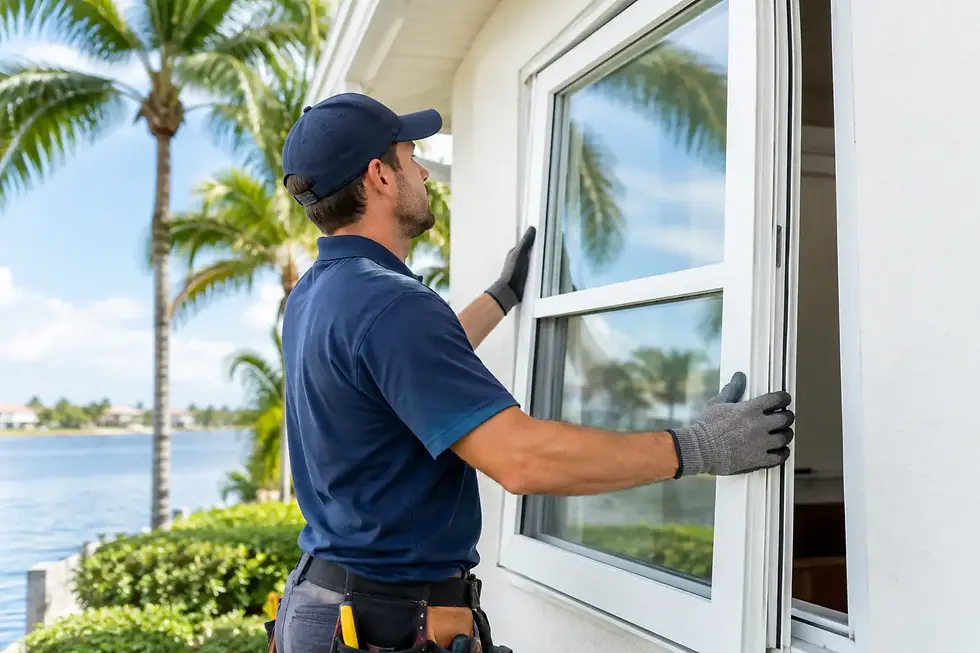
Professional installation starts with accurate measurements and an assessment of the existing opening. The installer should address framing condition, water management, secure attachment, and perimeter sealing. This approach supports hurricane protection, helps control air leakage, and gives the window its best chance to reduce outdoor noise.
For homes with older stucco, water intrusion history, or windows that have shifted over time, the condition of the opening deserves special attention. Replacing the visible window without correcting the surrounding issue can lead to disappointing results later.
Other Parts of the Home That Let Noise In
Windows are often a major source of outdoor sound, but they are not always the only source. If a room remains noisy after a window upgrade, look at the rest of the exterior envelope.
Exterior doors with worn sweeps or poor weatherstripping can let in traffic and neighborhood noise. Older sliding glass doors may have loose panels and tracks that transmit sound. Attic vents, wall penetrations for HVAC lines, garage doors, and thin sections of exterior wall can also contribute.
This is where planning several improvements through one contractor can be useful. For example, a homeowner replacing impact windows may also be considering impact doors, roofing work, or HVAC upgrades. Looking at how these systems connect can prevent missed details and help create a better-protected, more comfortable home overall.
Choosing Impact Windows for a Quieter South Florida Home
Hurricane rating should remain a central part of the decision, particularly in South Florida. Yet it should not be the only question. Ask about the glass package, frame construction, available insulated options, and how the chosen product may perform for your specific location.
A street-facing bedroom near a busy road may benefit from a different window configuration than a sheltered rear room. Large picture windows, sliding doors, and openings facing the primary noise source deserve careful attention. In some cases, the best improvement comes from replacing multiple windows on the exposed side of the home instead of only one unit.
Also consider how you use the room. A family may prioritize quieter bedrooms. A remote worker may focus on a front office where calls are regularly interrupted. Homeowners who enjoy relaxing indoors during rainstorms may value the way well-installed impact windows soften the constant noise of wind-driven rain.
Avoid choosing solely on the lowest proposal. The product, installer experience, permitting requirements, and workmanship all affect long-term performance. A window that looks good on installation day should also close securely, resist water intrusion, and provide dependable comfort for years.
Noise Reduction Is One Benefit Among Many
The same features that help impact windows reduce sound also support other homeowner goals. Tighter seals can help keep cooled air inside, which may improve comfort and reduce strain on your HVAC system. Stronger windows and doors can improve security, protect against windborne debris, and add polished curb appeal.
For many Florida homeowners, the value is in combining those benefits. You are not making an upgrade only for the next hurricane season or only for a quieter bedroom. You are investing in a home that feels more secure, more efficient, and easier to enjoy every day.
At 1 OAK Home Improvement, a free in-home consultation can help you compare options based on your home's layout, storm-protection needs, and the noise concerns that matter most to your family. Clear recommendations and careful installation are especially important when the project affects both comfort and protection.
A quieter home begins with identifying where sound is entering, then choosing improvements that solve the problem without creating new ones. When impact windows are properly selected and installed, closing the window can feel like putting a little more distance between your family and the noise outside.


Comments