


Boynton Beach Roof Maintenance That Prevents Leaks

A roof rarely fails all at once. In Boynton Beach, leaks often begin with a lifted tile, cracked sealant around a vent, clogged drainage, or flashing that has loosened after repeated wind and rain. Consistent Boynton Beach roof maintenance gives homeowners a chance to address those small issues before water reaches the underlayment, attic, ceilings, and walls.
Your home is one of your greatest investments. Protecting it does not mean reacting to every rainstorm with worry. It means knowing what conditions put a South Florida roof at risk, recognizing warning signs early, and bringing in a licensed roofing professional when the work calls for more than a visual check.
Why Boynton Beach Roof Maintenance Matters
Palm Beach County roofs work hard year-round. Intense sun can dry and age roofing materials. Humidity encourages algae and mildew growth. Heavy seasonal rain tests drainage, while tropical storms can shift tiles, loosen fasteners, and expose vulnerable edges.
That combination changes how homeowners should think about maintenance. A roof may look fine from the driveway yet have small openings around penetrations or valleys where water collects. By the time a ceiling stain appears, moisture may already have traveled beyond the original entry point.
Maintenance does not guarantee that a roof will never need repair or replacement. Materials have a service life, and severe weather can damage even a well-maintained system. What maintenance does provide is earlier information. It helps you make a clear decision based on the roof's actual condition instead of waiting for a leak to force an urgent one.
What to Check From the Ground
Homeowners should avoid walking on their roof. Tile can crack underfoot, shingles can be damaged by unnecessary traffic, and a wet or steep roof presents a serious fall hazard. A careful ground-level check after major storms and a few times throughout the year can still reveal useful clues.
Look for missing, shifted, cracked, or visibly broken tiles. On shingle roofs, watch for curling edges, bare-looking areas, loose tabs, or a buildup of granules near downspouts. Metal roofs should be checked for lifted panels, loose-looking trim, corrosion, and screws that appear backed out. For flat roofs, pay attention to ponding water, debris buildup, blisters, or areas where the surface coating looks worn.
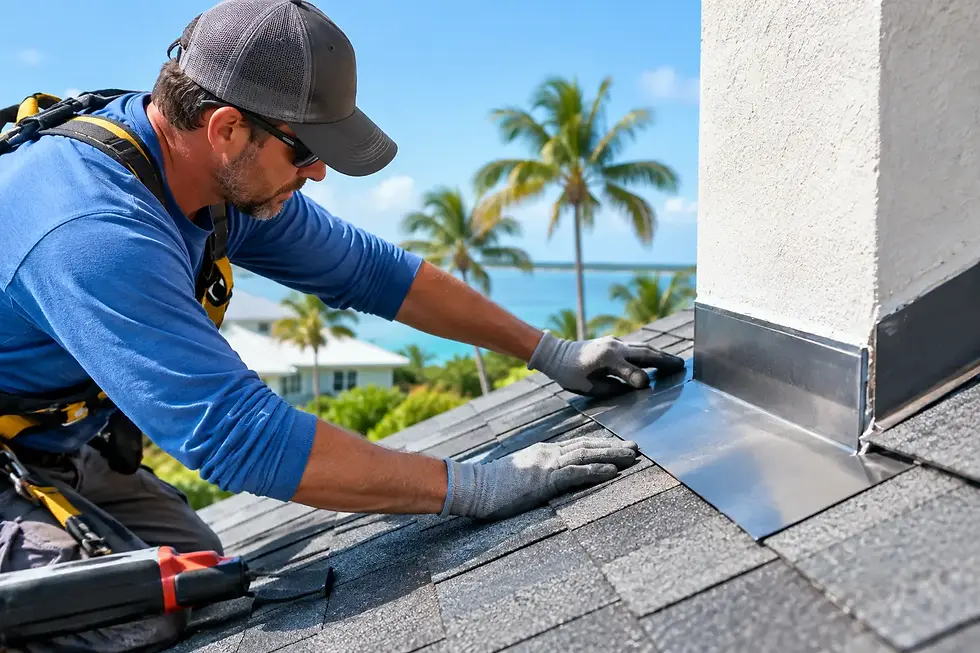
Also look at the places where the roof meets other parts of the home. Flashing around chimneys, skylights, vents, walls, and roof transitions is designed to direct water away from openings. If it appears bent, separated, rusted, or poorly sealed, it deserves professional attention.
Inside the house, check ceilings near exterior walls, around vents, and below roof valleys. Fresh stains, peeling paint, damp insulation, a musty odor, or bubbling drywall can all point to a moisture issue. These signs do not always mean the roof is the source, but they should not be ignored.
Keep Water Moving Off the Roof
Drainage is one of the most practical parts of roof care. Leaves, palm fronds, seed pods, and windblown debris can settle in gutters, scuppers, valleys, and around roof drains. When water cannot move away as intended, it can back up beneath roofing materials or remain on flat surfaces longer than it should.
Clean gutters and downspouts regularly, especially after heavy storms. Make sure downspouts discharge away from the foundation and that extensions have not shifted. If your home has a flat roof or low-slope section, roof drains and scuppers need special attention because even a partial blockage can lead to standing water.
Pressure washing is not automatically the answer to roof staining. High-pressure cleaning can damage shingles, dislodge tile, strip protective coatings, and force water into areas it does not belong. The right cleaning method depends on the roofing material, its age, and the type of buildup present. When in doubt, ask a roofing professional what method is appropriate for your roof.
Pay Attention After Wind and Heavy Rain
A post-storm check is different from routine upkeep. You are looking for changes: a new tile on the ground, debris caught at a roof edge, loose soffit material, a damaged gutter, or water marks that were not there before.
After a major weather event, take clear photos from the ground before moving or discarding anything that may be relevant. Then schedule an inspection if you see visible damage, notice interior moisture, or suspect that wind lifted materials. Waiting for the next storm can turn a manageable repair into a larger restoration project.
It also helps to remember that storm damage is not always dramatic. A small break in the waterproofing system may only leak when rain arrives at a certain angle. Professional roof inspections are valuable because they focus on vulnerable details that are difficult to assess safely from the ground.
Maintenance Needs Vary by Roof Type
There is no single maintenance plan that fits every Boynton Beach home. Tile roofs are durable and well suited to South Florida conditions, but individual tiles can crack or shift, and the underlayment beneath them still needs to perform. Repairing a tile roof is not simply about replacing what is visible - the surrounding components must be evaluated too.
Shingle roofs need attention to wind damage, granule loss, nail pops, and sealant conditions near vents and flashing. A few missing shingles may be repairable when matching materials and the overall roof condition allow it. If widespread wear is present, repeated spot repairs may not be the best long-term choice.
Metal roofs require checks at fasteners, seams, penetrations, and edge details. Corrosion and coating wear should be addressed early, particularly in humid or coastal environments. Flat roofs depend on proper drainage and intact seams, so ponding water, surface cracks, and flashing failures should be evaluated promptly.
The right repair decision depends on the roof's age, the extent of the damage, the availability of compatible materials, and whether the issue is isolated or part of a wider pattern. A trustworthy contractor should explain those trade-offs clearly.
When a Professional Inspection Is the Smart Move
A professional inspection is worthwhile at least once a year, after a significant storm, and whenever you notice a potential warning sign. It is especially useful if you are unsure of your roof's age, have recently purchased the home, or have completed work that added new penetrations, such as vents or equipment.
During an inspection, a roofing professional can evaluate materials, flashing, penetrations, drainage, roof edges, and signs of hidden deterioration. They can also identify whether a repair is likely to solve the problem or whether the roof is approaching the point where replacement should be planned.
Choose a licensed and insured contractor that works with your roofing system. Ask for a straightforward explanation of what was found, what needs immediate attention, and what can be monitored. Homeowners deserve clarity, not pressure, when making decisions about their property.
Build a Simple Maintenance Routine
The best routine is one you will actually follow. Check the roof and exterior after major storms, keep gutters and drainage paths clear, and watch interior ceilings for new changes. Schedule a professional roof inspection annually or sooner when conditions warrant it.
Keep records of inspections, repairs, cleaning, and storm-related observations. Photos and service documentation make it easier to track recurring issues and understand how the roof is aging over time. They can also help a contractor diagnose a problem without guessing at what has happened before.
For Boynton Beach homeowners, roof maintenance is not about creating extra work. It is about protecting the home from the small, preventable problems that South Florida weather can quickly make worse. If something does not look right, a prompt professional inspection can bring peace of mind and help keep a minor concern from becoming a major repair.


Comments